

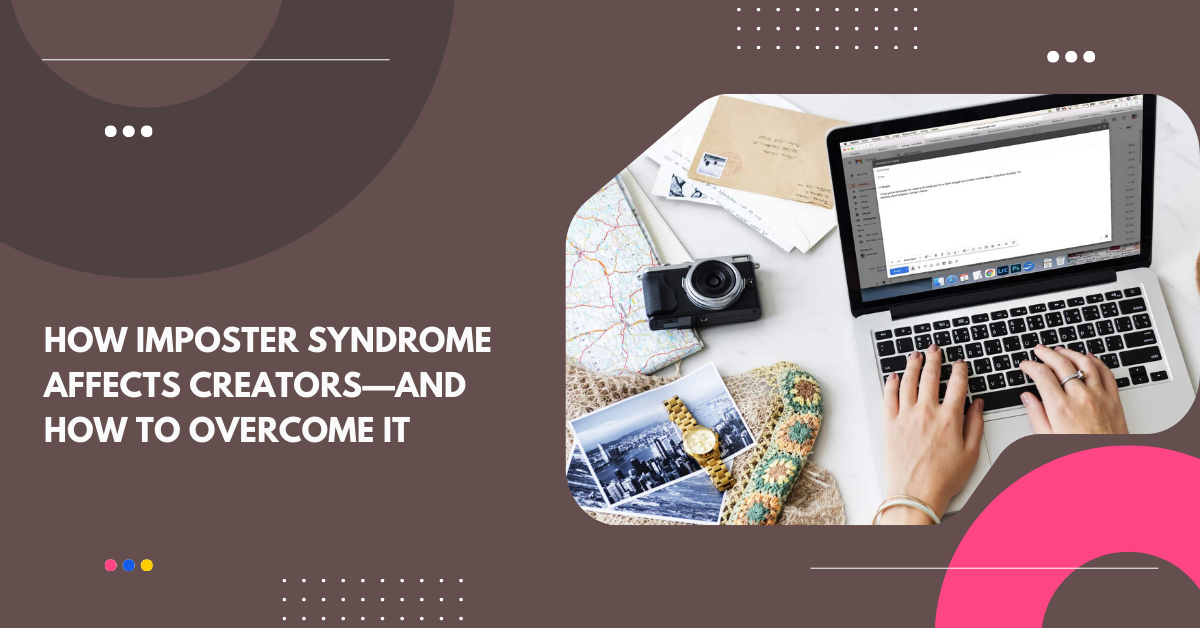

You’re posting consistently, and people are engaging with your content, and brands are DM-ing you. But there’s a tiny voice in your head whispering that you don’t actually know what you’re doing, and you’re probably the most clueless content creator on the internet. Welcome to imposter syndrome! Every content creator’s uninvited and extremely persistent guest, and quite possibly, the most loyal hater every content creator has.
What Is Imposter Syndrome?
Imposter syndrome is when your results say you’re doing well, but your brain says that it is just luck. You’ll be exposed any day now. For content creators, it sounds like, “Why would anyone listen to them? Others are way more talented; they don’t deserve this growth, or one bad post, and it’s over.” Here’s a spoiler, though: it’s not over. It’s far from over. It’s just your brain being dramatic.
Why Content Creators Are Extra Prone to It
Being a content creator means that algorithms don’t provide emotional comfort, your work is public, metrics are visible, and comparison is just a scroll away. Imposter syndrome thrives when your sense of worth comes from likes, views, or virality. Kalakaaar’s Digital Content Creation Course helps creators replace algorithm anxiety with strategy, structure, and self-trust.
Symptoms of Imposter Syndrome
Minimizing your victories, putting off posting because it’s “not perfect,” and experiencing anxiety rather than excitement following growth mean that you may be going through the infamous imposter syndrome. You compare yourself to content creators who have come before you all the time. Congratulations! You are a real person and not a fraud if this sounds familiar to you. Every content creator you admire has doubted themselves, felt behind, considered giving up, and experienced moments of complete insecurity. This is a fact that no one ever tells you. The distinction? Nevertheless, they continued to appear. The absence of doubt is not the same as confidence. Despite this, it’s still posting.
How a Content Creator Can Handle Imposter Syndrome
This is what really helps:
- Maintain receipts: Save screenshots of milestones, encouraging remarks, and direct messages. Read them on bad days.
- Give Up Waiting to Feel “Ready“: The word “ready” is untrue. Growth happens after posting, not before.
- Prioritize Progress Over Perfection: Being the best is not your job. The goal is to improve upon yesterday.
- Remove Metrics from Self-Worth: Low value does not equate to low reach. Algorithms change over time. Your influence doesn’t.
- Discuss Your Feelings: Ironically, expressing your self-doubt increases your relatability rather than diminishing your credibility.
A Reminder You Might Need Today
You’re not “lucky.” You are growing, trying new things, and learning. You wouldn’t care this much if you were really a fraud. Post the content, then. Make a brand pitch. Accept the opportunity. Additionally, let your work speak louder than your self-doubt. You’re not pretending. You’re turning into it.